
Artificial intelligence has officially infiltrated the academic space.
In the new AI age, Cleveland State University students are among the 179 million people in the United States and 900 million in the world using AI tools to conduct their work.
For many such students, AI is a tool that can often overtake their own thought processes. Suddenly, instead of thinking through an idea or searching for sources, their hands fidget for Perplexity AI or ChatGPT.
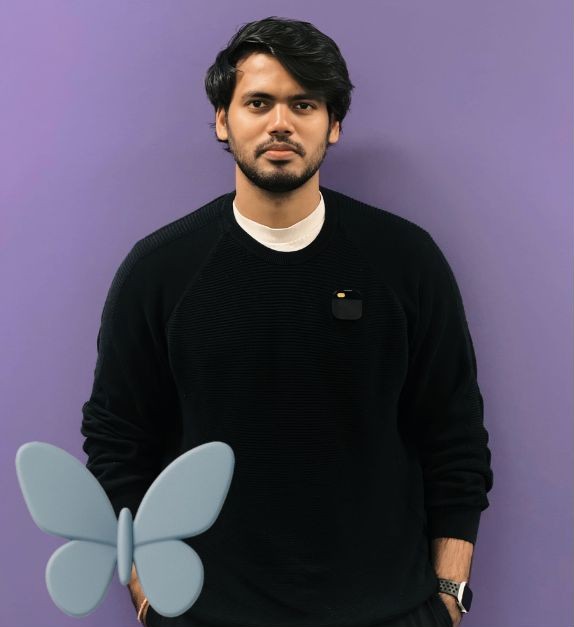
That is why Vikas Sabbi, an alumnus of Cleveland State University’s software engineering graduate program, decided to create Noto: an innovative research note-taking application.
“I felt like one of the problems that I noticed was that I slowly stopped thinking,” Sabbi shared in a conversation with The Cauldron. “Like, if I need something, I just immediately go to Perplexity or ChatGPT to find an answer instead of first thinking through it and learn[ing] from it. I thought maybe, ‘what if I just start with a little experiment, where I take a note first and also have something like a searchable feature?’”
Inspired by his own experience working with AI, Sabbi created an app that merges AI tools for research, writing and content creation with an individual note-taking space. Essentially, users begin by typing a thought of their own, then AI refines the thought and conducts research on it, pulling from credible sources.
What began as a personal project evolved into something bigger for Sabbi.
“I shared [Noto] with one of my friends who’s doing a Ph.D, and I said ‘Let me know if it interests you,’” said Sabbi. “And she said she started using it…she said it kind of made her more productive. She uses it like an hour a day, mostly to brain dump her thoughts and learn within the platform itself. That’s when I thought, ‘Oh, students are the ones who would benefit from this the most right now.’”
Noto takes away the annoyance of tab-hopping by consolidating the note-taking, AI usage and research processes all into one place. In doing so, the app promotes both AI literacy and productive writing.
“It’s built for writers, students and builders who want their notes to evolve instead of collect dust,” Sabbi wrote on a LinkedIn post promoting the app.
Sabbi’s other latest creation, the Aura application, is useful to CSU students for a different reason.
Much like Noto, Aura began as a personal experiment.
“Aura is like an emotional companion,” shared Sabbi.
Sabbi designed Aura using a new software development practice called vibe coding, which he described as “the next big skill in technology” that integrates AI into the coding process.
Featuring interactive characters that represent different emotions, Aura acts as a “pocket guide to emotional wellness,” in which users can reflect on their feelings, meditate and receive tips for support.
Other features on the app include a space to journal and an AI-powered emotional support chatbot named “Luna.” The app also generates a wellness score out of 100 after every “meditation,” or every time a user logs in an emotion.
While Aura is a companion for all, Sabbi believes the app could really connect with students.
“Students have different emotions that they might feel in a day, like they’re having a rough time in school or the outside world,” said Sabbi. “I think having a little companion…just helps someone to stop for a moment and just take a pause.”
Sabbi described the process of creating as a form of therapy for himself. His experience creating Aura, in particular, was guided by his emotions, “stress, sadness, calm, happiness.”
The same way Aura has helped him, Sabbi hopes the app helps others.
“I feel like if this app helps at least 10 people to make their day or at least a part of their day beautiful, that’s a win for me.”
Students can access Noto here. Aura is an iOS application.
Meet Vikas Sabbi
Originally from India, Sabbi moved to Cleveland in 2022 to pursue his master’s in computer science at CSU.
He graduated in December 2023 and earned the award for Graduate Student of the Year. He earned his bachelor’s of engineering in 2019 at the Sathyabama Institute of Science & Technology in Chennai, India.
Sabbi recently founded a startup named Make Something Wonderful, which he describes as “a creative lab by reimagining the role of software in our lives.” There, he platforms his creations. In 2019, he founded and led the Chatrasahaya Foundation alongside other students for an undergraduate project, which sought to improve the quality of children’s education.
He previously worked for BetterYou and Spawn in product operations and management.
 Ele Solovyov
  EveLynne Bruening