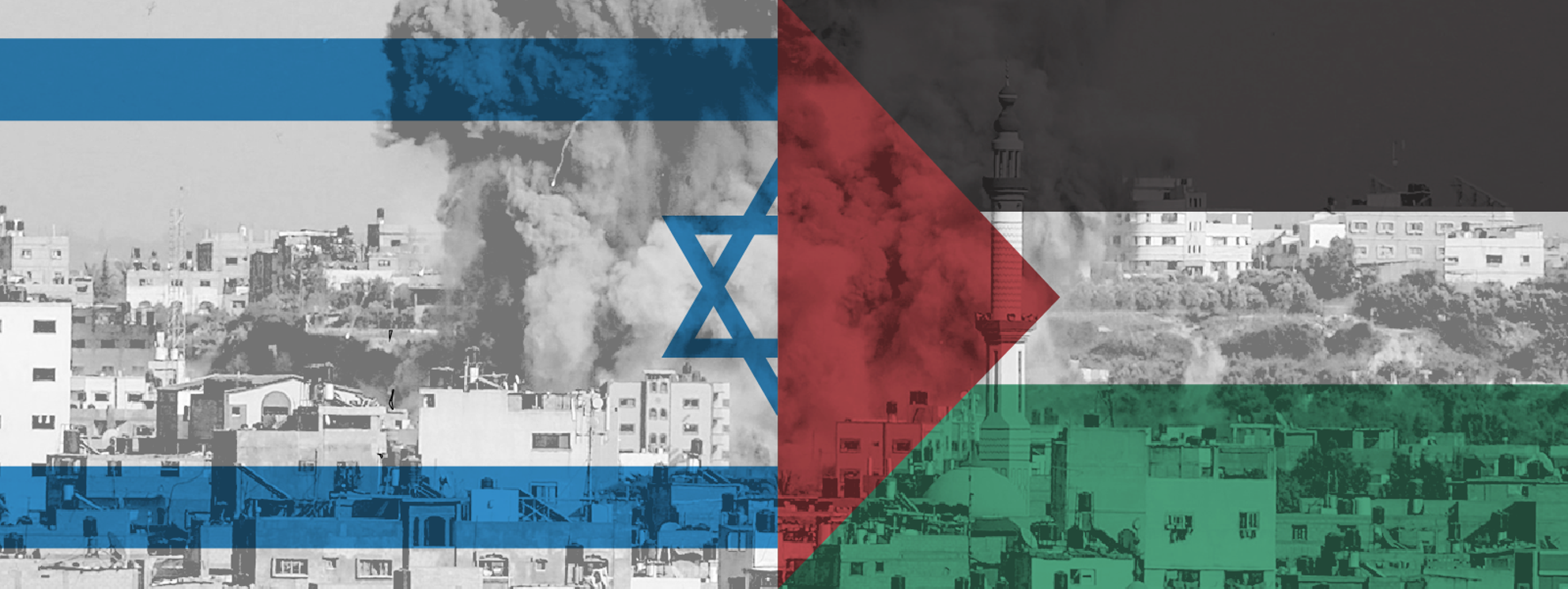
The conflict between Palestine and Israel has been a major global topic since Oct. 7, when Hamas, the governing authority of the Israeli-occupied Gaza Strip, launched an attack on southern Israeli cities, killing over 1,000 people.
However, there is a long history of violence and disputes between the two, dating back to 1947.
The Beginning
In 1947, the United Nations (U.N.) adopted Resolution 181, also known as the Partition Act, which was a plan that sought to split the British Mandate of Palestine into Jewish and Arab states. This Act was accepted by the Jewish leadership but rejected by Palestine Arab leaders and the Arab states, which sparked fighting largely between Jewish and Palestinian Arab militias.
Then, on May 14, 1948, the state of Israel was created and triggered the first Arab-Israeli War. The conflict came to an end a few months later with Israel claiming victory, over 750,000 Palestinians displaced and the territory being split into three: the state of Israel, the West Bank (of the Jordan River), and the Gaza Strip.
Continuing on through the years, tensions grew between Israel, Egypt, Jordan and Syria–until Oct. 29, 1956, when Israel, Great Britain and France launched a joint attack against Egypt.
This attack sparked the second Arab-Israeli war or the Suez War, which failed in trying to achieve the goals of instituting a ‘regime change’ and deposing Gamal Abdel Nasser, Egypt’s leader at the time.
Egypt, Jordan and Syria then signed mutual defense pacts in anticipation of a possible mobilization of Israeli troops.
However, conflict did not cease there.
War After War
In 1967, Egypt made a series of maneuvers, which Israel responded to by attacking the Syrian and Egyptian air forces, starting the Six-Day War. When the six days were over, Israel gained control over the Sinai Peninsula and Gaza Strip from Egypt; the West Bank and East Jerusalem from Jordan; and the Golan Heights from Syria.
According to an article on Britannica, “Egypt’s casualties numbered more than 11,000, with 6,000 for Jordan and 1,000 for Syria, compared with only 700 for Israel.”
The Six-Day War was also the start of a new phase of conflict between Palestinians and Israelis because there were hundreds of thousands refugees and more than one million Palestinians were living in Israel’s newly acquired territories.
Six years later, while celebrating Yom Kippur on Oct. 6, 1973, a surprise attack was launched by Egypt and Syria on Israel, marking the start of the October War, better known as the Yom Kippur War. Though there weren’t significant gains for the parties involved, Egypt and Syria were able to negotiate over their once-controlled territories.
After a series of ceasefires and attempts to negotiate peace, representatives from Egypt, Israel and the United States under the leadership of former President Jimmy Carter signed the Camp David Accords, a peace treaty that marked the end of the thirty-year conflict in March 1979.
The First Intifada
However, the Palestinian’s desire in having the right to self-governance persisted, and, in1987, hundreds of Palestinians rose up against the Israeli government in hopes of seeing change in Israel’s military occupation in the West Bank and the Gaza Strip. This became known as the First Intifada.
A series of protests, riots and civil disobedience, the First Intifada lasted from December 1987 to March 1991 when the Madrid Conference took place. Others argue that the uprisings concluded in 1993 with the signing of the Oslo Accords.
Hosted by Spain and sponsoring from the U.S and Soviet Union, the Madrid Conference was an attempt to re-explore the Israeli-Palestine peace process by looking back through the 1970s.
Talks for Peace
In 1993, the signing of the Oslo Accords, interim agreements between Israel and the Palestine Liberation Organization (PLO), took place. The agreements created the Palestinian National Authority, which was tasked with the responsibility of conducting limited Palestinian self-governance over parts of the West Bank and the Gaza Strip. Another outcome was the international acknowledgement of the PLO as Israel’s partner in permanent-status negotiations in remaining issues surrounding the Israeli–Palestinian conflict.
In 1995, the Oslo Accord II was signed to expand upon the previous accords by adding revisions that mandated the complete withdrawal of Israel from six cities and 450 towns in the West Bank.
However, a large portion of Palestine’s population pushed back against the accords due to the attacks and suicide bombings occuring during what was supposed to be a time of ‘peace.’ Far-right Israelis also opposed the accords.
Second Intifada
Still longing for the control of their once-claimed land, Palestinians started their Second Intifada in September 2000, which would last until 2005. Israel’s response to the uprising was to construct a barrier wall around the West Bank in 2002, going against opposition from the International Court of Justice (ICJ), the U.N.’s highest court, and the International Criminal Court.
The Emergence of Hamas and Fatah
In 2006, Hamas won the Palestinian National Authority’s parliamentary elections, leaving the long party rule of Fatah and granting Hamas control of the Gaza Strip. However, this would go unrecognized by surrounding neighbors and other nations as Hamas was classified as a terrorist group. This overtaking led to an outbreak of violence between Hamas and Fatah up until the two merged into an unity government in 2014.
Fatah was founded in the late 1950s as a political and military organization of Arab Palestinians with the purpose of pulling Palestine from Israel’s control. One of their main tactics in achieving this goal was through the use of guerrilla warfare, the use of small independent forces to disrupt the opposing military operations.
In that same year during the summer, military confrontations took place within the Palestinian territories between Israel and Hamas. Hamas launched over three thousand rockets at Israel, to which Israel retaliated. After 73 Israelis and 2,251 Palestinians were killed, Egypt oversaw a ceasefire deal.
When another outbreak of violence occurred in 2015, Palestinian President Mahmoud Abbas of Fatah announced that Palestinians would no longer abide by the territorial divisions as agreed on in the Oslo Accords.
In March 2018, after Palestinians stormed the perimeter fence between the Gaza Strip and Israel to throw rocks, Israeli troops killed 183 Palestianans and injured more than 6,000. Hamas would respond a few months later by launching over a hundred rockets at Israel, only for Israel to strike over 50 military targets.
The political stress from this resulted in Fatah and Hamas splitting from the unity government, with Fatah controlling the Palestinian Authority from the West Bank and Hamas ruling over the Gaza Strip.
The Last Few Years
During the time of former U.S. President DonaldTrump’s administration, a longstanding federal policy was reversed that canceled funding for the U.N. Relief and Works Agency, a major source of aid to Palestinian refugees, and also relocated the U.S. embassy from Tel Aviv to Jerusalem.
In early May 2021, after a court ruled in favor of evicting Palestinian families from their homes in East Jerusalem, protests erupted with Israeli police using force with the demonstrators. Over the next few days of violence, Hamas launched another round of rockets into Israeli territory.
Israel responded with a bombardment of air strikes that killed 20 Palestinians in Gaza. The air strikes hit military and non-military structures, including residential buildings, media headquarters, refugee and healthcare facilities. After a ceasefire was called, both Hamas and Israel claimed victory, though more than 250 Palestinians and at least 13 Israelis were killed, nearly 2,000 others wounded and 72,000 Palestinians displaced.
Present-Day Violence
Last Friday, the ICJ called upon Israel to “take all measures” in preventing the genocide of Palestinians, but didn’t demand an immediate ceasefire, claiming that Israel had “a country’s right to self-defense.”. Both parties, including South Africa, who brought this genocide case against Israel before the court, took the ruling as a victory.