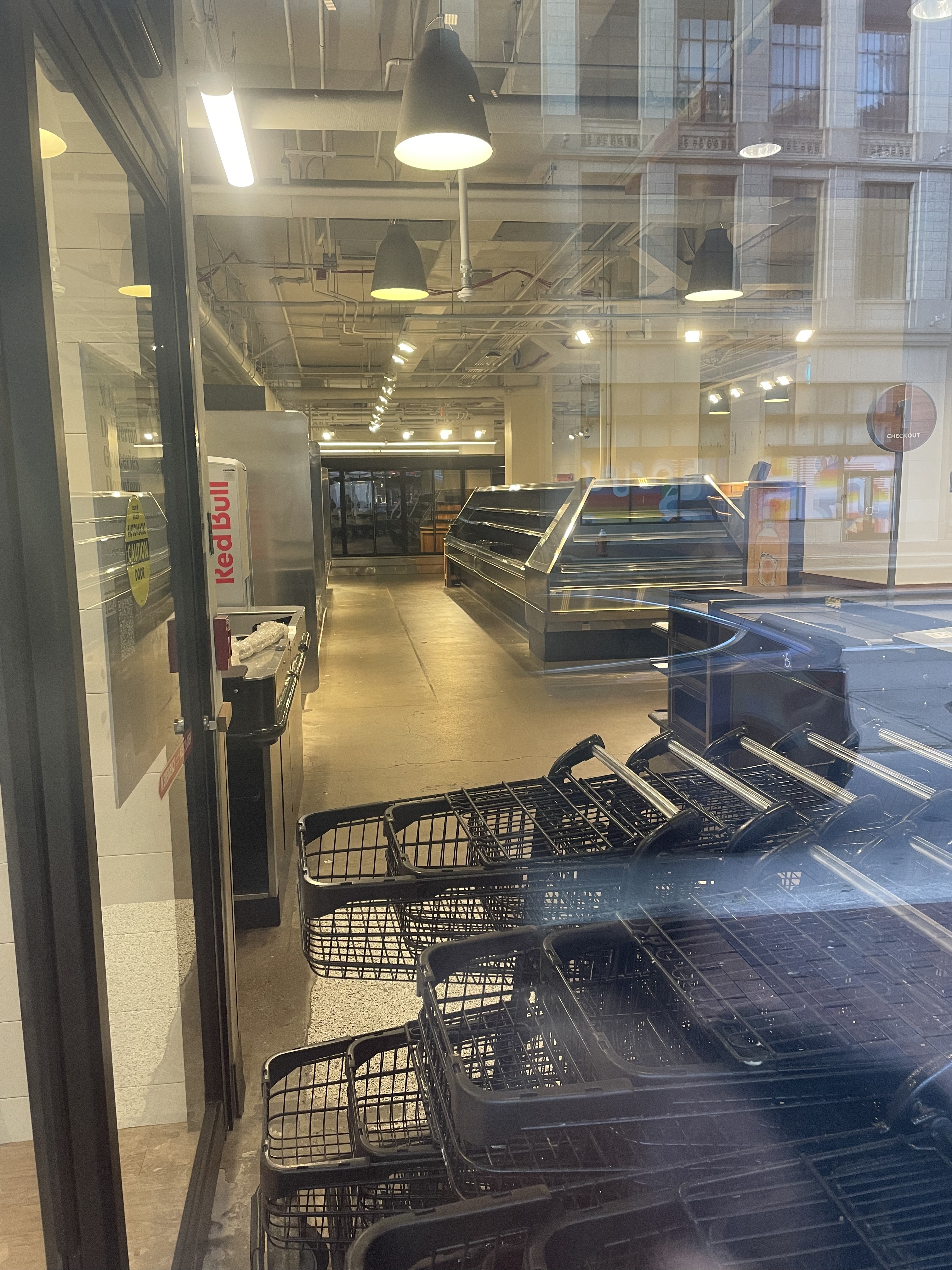
Due to the July 31, 2026 closure of Heinen’s on Euclid Avenue, downtown Cleveland residents, along with the thousands of Cleveland State University students, are left without any local grocery options.
The Student Reality
For CSU’s on-campus students, the loss of the Euclid Avenue store eliminated their primary source for fresh food within walking distance.
Those without a personal vehicle face even more complexities, for the University’s discounted U-Pass program has been discontinued this year. Passes are still available at their going rate of $5 for a day pass through the Regional Transit Authority (RTA) website.
Even with the usage of public transit, a quick 10-minute errand down the street has transformed into a multi-hour excursion.
Many students without cars opt for third-party delivery applications, such as Instacart or DoorDash, which come with service surcharges, delivery fees and tips that stretch tight student budgets. Others are turning to nearby convenience stores, such as City Foods or CVS for grocery staples, though these places lack fresh fruits, vegetables and raw meats, making it difficult to stock up on balanced items.
The ‘Food Desert’ Question
The closure of Heinen’s reignited discussions regarding urban retail sustainability in Cleveland’s commercial center.
Despite residential growth downtown, operating a full-scale grocery store requires complex security and supply chain logistics unique to dense urban environments. Cleveland now risks expanding its food deserts — geographic areas where access to affordable, nutritious food is severely restricted.
“There’s about 1.3 million Ohioans living in food-insecure neighborhoods,” Cleveland City Council member Richard A. Starr (Ward 5) said in a statement to WOIO-TV.
Local leaders are attempting to respond. Cleveland City Council supported Bill 543, titled the Food Desert Elimination Program. If passed by the Ohio General Assembly, the legislation would grant up to $15,000 to small food store owners, such as Simply Fresh Market, to stock fresh produce and broader grocery options.
Alternative Solutions
While downtown Cleveland lacks a central supermarket, residents and students still have options within transit distance:
- Dave’s Market (Midtown): Located east of campus on Chester Avenue, Dave’s is the closest full-service supermarket, accessible via a brief RTA Healthline bus trip or bike ride along Chester.
- West Side Market: Situated across the Hope Memorial Bridge in Ohio City, this historic public market offers fresh produce, meats and baked goods from local vendors via the RTA Red Line (~25 minutes) or a bike ride across the Cuyahoga River (~15 minutes).
- Campus-Area Express Markets: City Foods on East 12th Street sits a 10-minute walk from CSU, while Simply Fresh Market on West St. Clair Avenue is roughly 20 minutes away on foot. Both carry quick pantry staples, though selection remains limited.
- CSU Student Food Pantry: Located in Berkman Hall Room 122, the pantry supports students facing immediate food insecurity by offering nonperishable goods, fresh staples and personal hygiene items.
The Heinen’s closure emphasizes the delicate state of urban food access in Cleveland, a city that is already struggling to maintain downtown residential momentum. For Cleveland State University students, navigating the sudden lack of grocery options calls for initiative, whether it is coordinating public transit to Midtown, or relying on campus safety nets like the food pantry.
By and large, long-term change rests in the hands of legislation and local incentives to persuade food retailers that downtown Cleveland is a suitable location to launch.